Red Meat vs. Processed Meat: What’s the Difference in Risk?
Verdict: Overstated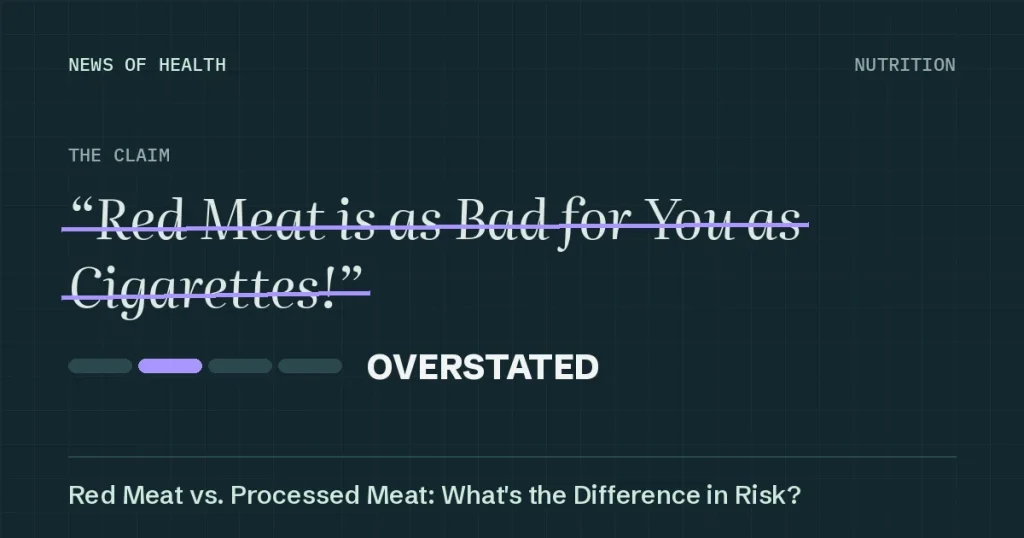
Distinguishing Red from Processed Meat
When discussing the health effects of meat, it is crucial to understand the difference between “red meat” and “processed meat.” These terms are often used together, but they describe different products with distinct risk profiles. Understanding this difference is the first step toward making informed choices about your diet.
Red meat refers to muscle meat from mammals. This includes beef, pork, lamb, veal, and goat. The “red” color comes from a higher concentration of myoglobin, an iron-rich protein, compared to poultry or fish. Unprocessed red meat is simply a cut of meat that has not been fundamentally altered beyond basic preparation like cutting, grinding, or freezing.
Processed meat, on the other hand, is meat that has been transformed through salting, curing, fermentation, smoking, or other processes to enhance flavor or improve preservation. This category includes bacon, sausages, hot dogs, salami, corned beef, and ham. Importantly, processed meat can be made from red meat (like pork sausages) or poultry (like turkey bacon). The processing itself is the key feature, not the original source of the meat. These products are often examples of what are ultra-processed foods.
The Link to Colorectal Cancer
One of the most widely discussed health concerns associated with meat consumption is its link to colorectal cancer. Here, the distinction between processed and unprocessed red meat is particularly important. A global body of health experts has classified processed meat as “carcinogenic to humans,” placing it in the same category as tobacco smoking and asbestos. This does not mean they are all equally dangerous, but it does mean the strength of the evidence that they can cause cancer is similar.
For processed meat, major health organizations agree that consumption increases the risk of colorectal cancer. The mechanisms are thought to involve chemical compounds formed during processing, such as N-nitroso compounds and polycyclic aromatic hydrocarbons (PAHs), which can damage the cells lining the colon. Regular, long-term consumption of even small amounts of processed meat is associated with a noticeable increase in risk.
For unprocessed red meat, the evidence is less definitive. The same group of experts classified red meat as “probably carcinogenic to humans.” This reflects a lower level of certainty. The association is present in many studies but is not as strong or consistent as the link with processed meat. The risk seems to rise with the amount consumed. One compound of interest is heme iron, the type of iron found in red meat, which may contribute to the formation of damaging compounds in the gut.
Heart Disease and Other Health Risks
Beyond cancer, meat consumption is often linked to cardiovascular health. Again, the picture is clearer for processed meat. Large-scale observational studies consistently find that people who eat more processed meats have a higher risk of developing heart disease, high blood pressure, and type 2 diabetes. This is often attributed to the high sodium and preservative content in these products. The relationship between salt and blood pressure is a key factor in these health risks.
For unprocessed red meat, the evidence is more complex and sometimes conflicting. Some studies show a link between high intake of red meat and heart disease risk, while others find little to no association, especially when saturated fat intake is controlled for. The type of red meat may matter; leaner cuts might have a different impact than fattier ones. How the meat is cooked can also play a role, as high-temperature cooking methods like grilling or frying can create harmful compounds.
It is also worth considering what red meat might be replacing in the diet. A diet where red meat is substituted with fish, nuts, or legumes is likely to be healthier than one where it is replaced with refined grains or sugary snacks. The overall dietary pattern is more important than any single food. Focusing on a diet rich in fruits, vegetables, and whole grains provides a strong foundation for good health, regardless of moderate red meat intake.
Understanding the Strength of the Evidence
When we talk about the evidence linking meat to health risks, it is important to understand where that evidence comes from and what its limitations are. Most of the data on this topic comes from large, long-term observational studies. These studies follow thousands of people for many years, tracking their diets and health outcomes. They are excellent for identifying correlations; for example, they can show that people who eat more processed meat tend to get colorectal cancer more often.
However, these studies cannot definitively prove cause and effect. People who eat a lot of processed meat may also have other lifestyle habits that contribute to poor health, such as smoking, drinking more alcohol, or exercising less. Researchers try to adjust for these “confounding factors,” but it is impossible to account for everything perfectly. This is one reason why the link for unprocessed red meat is less certain; the associations are often weaker and could be influenced by other factors.
The gold standard for proving causation is the randomized controlled trial (RCT). In an RCT, researchers would assign one group of people to eat a certain amount of red meat and another group not to, then follow them to see who develops disease. For studying long-term diseases like cancer or heart disease, such trials are not practical or ethical. They would need to last for decades and would require immense control over people’s lives. Therefore, we must rely on the best available evidence, which is a combination of strong, consistent observational data and studies that explore the biological mechanisms involved.
Practical Guidance for Your Diet
Given the evidence, what are some sensible steps you can take? The advice from major health organizations is fairly consistent: limit your intake of processed meat as much as possible and moderate your consumption of unprocessed red meat. There is no need for most people to eliminate red meat entirely, but treating it as a less frequent part of the diet is a reasonable approach.
Here are some practical tips:
- Swap out processed meats. Instead of a ham or salami sandwich, try chicken, egg, or hummus. At breakfast, replace bacon or sausage with eggs, yogurt, or whole-grain toast with avocado.
- Reduce portion sizes of red meat. Use smaller amounts of meat in stews, stir-fries, or pasta sauces, and bulk up the dish with vegetables and legumes like beans or lentils.
- Choose leaner cuts. When you do eat red meat, opt for leaner cuts and trim any visible fat before cooking.
- Vary your protein sources. Aim to get protein from a wide variety of foods, including poultry, fish, eggs, dairy, beans, lentils, and nuts.
- Pay attention to cooking methods. Try to avoid charring meat. Cooking at lower temperatures, such as by stewing or poaching, may produce fewer harmful chemicals than high-heat grilling or frying.
When to see a doctor
Dietary changes should be part of a broader conversation about your health, but certain symptoms should prompt a visit to a doctor. Do not rely on diet alone to manage health concerns. See a healthcare professional if you experience persistent or concerning digestive issues. This includes things like a lasting change in your bowel habits (such as diarrhea or constipation), rectal bleeding or blood in your stool, persistent abdominal discomfort like cramps or pain, or a feeling that your bowel doesn’t empty completely.
Unexplained weight loss is another important reason to consult a doctor. If you are losing weight without trying, it can be a sign of an underlying medical condition that needs to be investigated. Similarly, persistent fatigue or weakness that doesn’t improve with rest should be evaluated by a professional.
Finally, if you have a strong family history of colorectal cancer or other digestive diseases, it is a good idea to speak with your doctor. They can advise you on appropriate screening schedules and other preventive measures you can take. Regular check-ups are important for everyone to monitor risk factors for heart disease, such as high blood pressure and cholesterol.