Salt and Blood Pressure: Does Less Always Mean Better?
Verdict: Overstated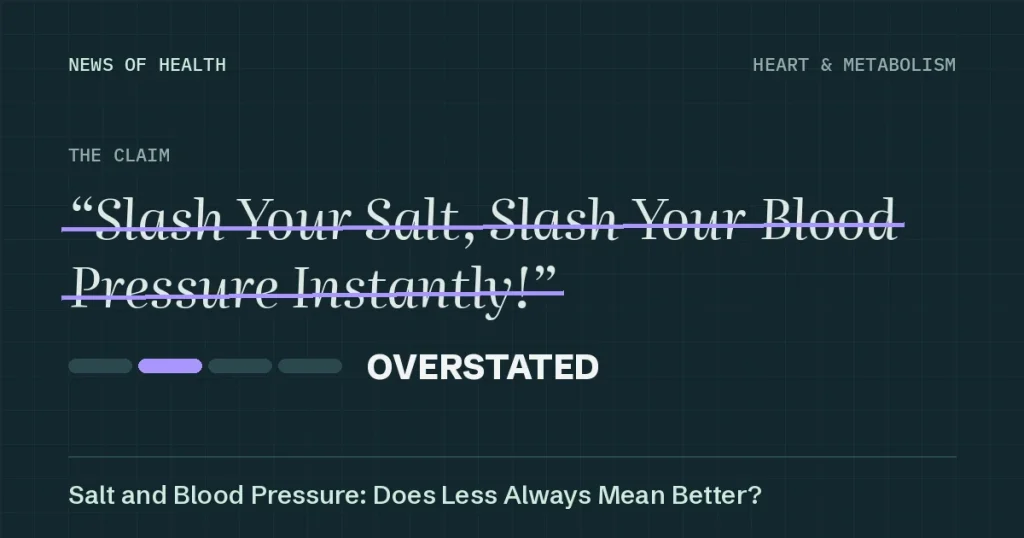
You have probably seen the advice everywhere: to protect your heart, cut back on salt. Headlines often suggest that slashing your salt intake is a straightforward way to lower your blood pressure and live a longer, healthier life.
This idea is widespread because the connection between salt and blood pressure is one of the most studied topics in nutrition. High blood pressure is a major risk factor for heart disease and stroke, so finding simple ways to manage it is a public health priority. But how strong is the evidence, and does this advice apply equally to everyone?
What is the link between salt and blood pressure?
The connection starts with sodium, which is the key mineral in salt. Your body needs a small amount of sodium to function correctly. It helps maintain the right balance of fluids, transmits nerve impulses, and influences muscle contraction and relaxation.
When you consume too much sodium, your body holds onto extra water to dilute it. This increases the total volume of blood inside your blood vessels. Think of it like turning up the water pressure in a garden hose; the increased volume pushes harder against the vessel walls, raising your blood pressure.
Over time, this elevated pressure, known as hypertension, can damage your blood vessels and organs. It forces your heart to work harder to pump blood, which can lead to the stiffening and narrowing of arteries. This process increases the risk of serious health problems, including heart attack, stroke, heart failure, and kidney disease. Managing other risk factors like high cholesterol is also crucial for protecting your heart.
How strong is the evidence?
The link between high sodium intake and higher blood pressure is supported by a vast body of scientific research. This evidence comes from different types of studies, each with its own strengths and weaknesses.
Large observational studies, which track the health and dietary habits of thousands of people over many years, consistently find that populations with higher salt consumption have higher average blood pressure and more cardiovascular events. While these studies show a strong correlation, they cannot definitively prove that salt is the direct cause. Other lifestyle factors, like diet and exercise, could also play a role. Getting enough quality sleep is another key part of a heart-healthy lifestyle.
To establish a cause-and-effect relationship, researchers turn to randomized controlled trials. In these studies, participants are randomly assigned to either a lower-sodium diet or a control diet. Systematic reviews that combine the results of many such trials consistently show that reducing sodium intake leads to a reduction in blood pressure. The effect is most pronounced in people who already have high blood pressure, but a modest effect is also seen in those with normal blood pressure.
The main limitation of many trials is that they are often short-term. It is more difficult to conduct long-term trials to see if sodium reduction directly prevents heart attacks or strokes years later. However, given the well-established role of high blood pressure as a cause of these conditions, major health organizations worldwide conclude that the evidence is strong enough to recommend sodium reduction as a key public health strategy.
Does everyone respond to salt the same way?
While reducing sodium generally lowers blood pressure on a population level, the effect can vary significantly from person to person. This concept is often referred to as “salt sensitivity.” Some individuals are highly salt sensitive, meaning their blood pressure rises and falls dramatically with changes in salt intake. Others are salt resistant, and their blood pressure remains relatively stable regardless of how much salt they eat.
Unfortunately, there is no simple, routine test to determine if you are salt sensitive. However, research suggests that certain factors increase the likelihood of being sensitive to salt:
- Age: Blood pressure tends to become more sensitive to salt intake as we get older.
- Genetics: Family history plays a role, and individuals of African descent have been shown to have a higher prevalence of salt sensitivity.
- Existing health conditions: People with high blood pressure, chronic kidney disease, or diabetes are more likely to be salt sensitive.
For these groups, paying close attention to sodium intake is particularly important. For a young, healthy person with normal blood pressure, the immediate impact of a high-salt meal might be minimal. But for an older individual with hypertension, the same meal could cause a significant and potentially harmful spike in blood pressure.
How much salt is too much?
This is where the debate often centers. Most health authorities agree that the average salt consumption in many countries is too high. The World Health Organization (WHO) recommends that adults consume less than 5 grams of salt (which is about 2,000 milligrams of sodium) per day. Many national guidelines, including those in the United States, offer similar advice.
The challenge is that most of the salt we eat does not come from the salt shaker. It is already present in processed and packaged foods. Most of the sodium in a typical diet comes from foods like bread, processed meats, canned soups, pizza, savory snacks, and restaurant meals. This makes it difficult for individuals to control their intake without carefully reading labels and changing their shopping habits. Many of these items are considered ultra-processed foods, which are a major source of sodium.
There is some scientific debate about the ideal target for sodium intake. While the benefits of reducing very high intake are clear, some researchers question whether pushing for very low levels (under 1,500 mg of sodium, for example) is beneficial for everyone, particularly for those with normal blood pressure. A few large observational studies have suggested a J-shaped curve, where both very high and very low sodium intakes are associated with increased health risks. However, these findings are controversial and not supported by the bulk of trial evidence. For now, the consensus remains that most people would benefit from reducing their sodium intake toward the recommended levels.
When to see a doctor
You should speak with a doctor or other qualified health professional if you have concerns about your blood pressure or diet. It is especially important to seek medical advice if you experience any of the following:
- You have had a blood pressure reading that is consistently high. High blood pressure often has no symptoms, so regular checks are crucial, especially if you have risk factors.
- You have a family history of high blood pressure, heart disease, or stroke and want to understand your personal risk.
- You have been diagnosed with a condition like kidney disease, diabetes, or heart failure, as you may require specific dietary advice, including a tailored sodium limit.
- You are considering making a drastic change to your diet, such as adopting a very low sodium plan. A professional can help ensure you do it safely and effectively.
- You are taking medications that could affect your body’s sodium and fluid balance, such as diuretics.
A healthcare provider can offer a personalized assessment of your health risks and help you create a safe and realistic plan for managing your blood pressure, which may include dietary changes, exercise, and, if necessary, medication.