Cholesterol: What Do My Numbers Mean?
Verdict: Overstated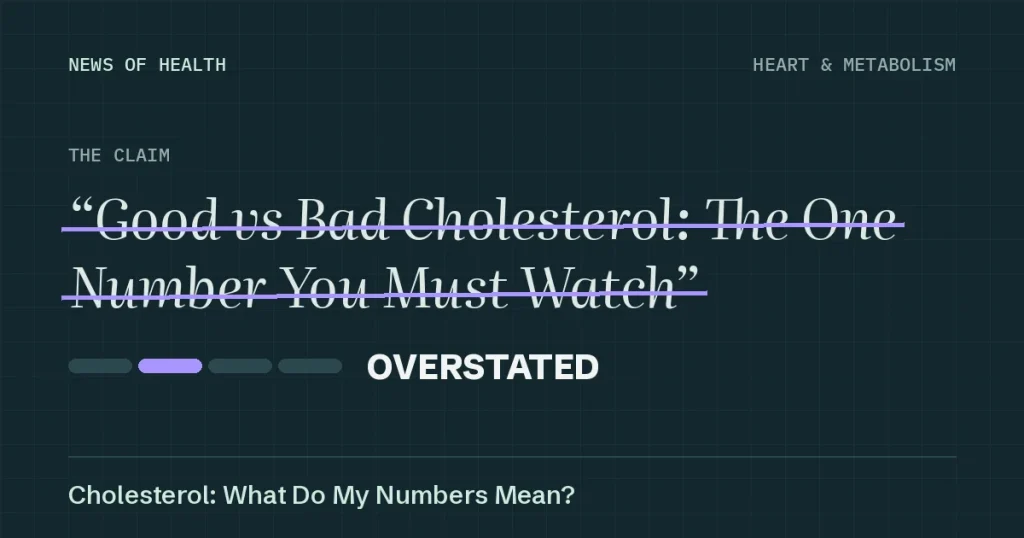
You have probably seen headlines about “good” and “bad” cholesterol. Ads for certain foods promise to lower it, while health articles warn of the dangers of high numbers. The message is often simple: one type of cholesterol is a villain to be eliminated, and another is a hero to be boosted.
This simple story spreads because it offers a clear enemy and an easy-to-understand goal. But the reality of cholesterol and its relationship with your health is more nuanced. It is less about a single number and more about the bigger picture of your cardiovascular health.
What is cholesterol, and why do we have it?
Cholesterol is a waxy, fat-like substance found in all the cells in your body. Your liver produces most of the cholesterol you need, and the rest comes from foods from animal sources, like meat, poultry, and full-fat dairy products. Despite its often negative reputation, cholesterol is essential for your body to function properly.
It plays several vital roles. It is a key building block for cell membranes, the outer layer that protects every cell. Your body also uses cholesterol to produce important hormones, including estrogen, testosterone, and adrenal hormones. It is necessary for making vitamin D, which is crucial for bone health. Finally, it is used to produce bile acids, which help your digestive system absorb fats and fat-soluble vitamins. This connection raises questions about whether you need a vitamin D supplement for optimal health.
Because cholesterol is fatty, it cannot travel through the watery environment of your bloodstream on its own. To move around the body, it is packaged into particles called lipoproteins, which are made of fat (lipid) on the inside and protein on the outside. The two main types of lipoproteins are what people commonly refer to as “good” and “bad” cholesterol.
LDL, HDL, and triglycerides explained
When you get a cholesterol test, also known as a lipid panel, your results will show several numbers. Understanding what each one represents is the first step to making sense of your overall profile.
Low-Density Lipoprotein (LDL) is often called “bad” cholesterol. Its main job is to transport cholesterol from the liver to cells that need it. The problem arises when there is too much LDL cholesterol in your blood. Excess LDL particles can deposit in the walls of your arteries, the blood vessels that carry blood from your heart to the rest of your body. This buildup, along with other substances, can form hard deposits called plaque. This process, known as atherosclerosis, narrows the arteries and makes them less flexible, which can increase the risk of heart attack and stroke.
High-Density Lipoprotein (HDL) is often called “good” cholesterol. HDL acts as a scavenger, picking up excess cholesterol from the arteries and transporting it back to the liver. The liver then removes the cholesterol from the body. By helping to clear out this excess, higher levels of HDL are thought to protect against the buildup of plaque in the arteries. This is why having higher HDL levels is generally considered beneficial for heart health.
Triglycerides are another type of fat found in your blood. When you eat, your body converts any calories it does not need to use right away into triglycerides. These are stored in your fat cells and released for energy between meals. While not a type of cholesterol, they are measured as part of a standard lipid panel because high levels are often associated with an increased risk of cardiovascular disease, especially when combined with high LDL or low HDL cholesterol.
How strong is the evidence?
The link between cholesterol and heart disease is one of the most studied topics in medicine. Decades of research have established a strong connection, but it is useful to understand the types of evidence and what they can tell us.
Much of the foundational evidence comes from large observational studies. These studies follow thousands of people over many years, tracking their cholesterol levels, lifestyle habits, and health outcomes. Consistently, these studies show a strong correlation: people with higher levels of LDL cholesterol tend to have higher rates of heart attacks and strokes. However, these studies can only show an association, not a direct cause-and-effect relationship. Other factors, like diet, exercise, or smoking, could also be involved. The role of specific dietary patterns, such as the consumption of ultra-processed foods, is an area of active research.
To establish causality, researchers rely on randomized controlled trials (RCTs). In these studies, participants are randomly assigned to receive a treatment (like a cholesterol-lowering medication) or a placebo. Numerous large-scale RCTs have demonstrated that lowering LDL cholesterol with medication significantly reduces the risk of cardiovascular events. This provides powerful evidence that high LDL is not just correlated with heart disease, but is a causal factor in its development. The evidence for raising HDL is less clear; trials of medications designed to increase HDL levels have not consistently shown a benefit in reducing heart attacks or strokes.
It is also important to understand the difference between relative and absolute risk. A treatment might be reported to reduce risk by a large percentage, which is a relative risk reduction. However, if your initial risk of a heart attack was already low, this large-sounding percentage might translate to a very small actual change in your overall odds. This smaller, real-world change is your absolute risk reduction. Your doctor uses your overall health profile to estimate your absolute risk and determine if a treatment’s benefit outweighs its potential harms.
Beyond the numbers: What else matters?
Your cholesterol numbers are not a complete report card on your health. They are one piece of a much larger puzzle. Healthcare providers use these figures as part of a broader risk assessment to predict your likelihood of having a heart attack or stroke in the next 10 years.
Other critical factors that influence your cardiovascular risk include:
- Age: Risk generally increases as you get older.
- Sex: Men generally have a higher risk than pre-menopausal women.
- Blood pressure: High blood pressure is a major risk factor for heart disease and stroke.
- Smoking status: Smoking damages blood vessels and dramatically increases cardiovascular risk.
- Diabetes: Having diabetes increases the risk of developing heart disease.
- Family history: A history of early heart disease in close relatives can indicate a genetic predisposition.
- Lifestyle factors: Your diet, level of physical activity, and body weight all play significant roles.
Focusing on a single number, like total cholesterol or even just LDL, can be misleading. For example, a person with moderately high LDL but no other risk factors might have a lower overall risk than someone with borderline LDL who smokes, has high blood pressure, and has diabetes. Your doctor integrates all this information to create a personalized assessment of your health and recommend the most appropriate actions.
When to see a doctor
You should not try to interpret your cholesterol results on your own. Always discuss them with a healthcare professional who can place them in the context of your overall health. Regular checkups are a good way to monitor your cholesterol and other health markers over time.
Specifically, you should schedule an appointment to discuss your cardiovascular health if:
- You receive lab results showing high cholesterol or triglycerides, especially if it is your first time seeing such numbers.
- You have a close family member (a parent or sibling) who developed heart disease at an early age (before 55 for men, 65 for women).
- You have other conditions that increase your risk, such as high blood pressure, diabetes, or kidney disease, and want to understand how your cholesterol levels fit into your management plan.
- You are considering making significant lifestyle changes or starting medications and want to create a safe and effective plan.
- You experience symptoms that could be related to heart disease, such as chest pain, shortness of breath, or pain in your neck, jaw, or back. These require immediate attention.