Do Detox Teas and Cleanses Actually Work?
Verdict: Not supported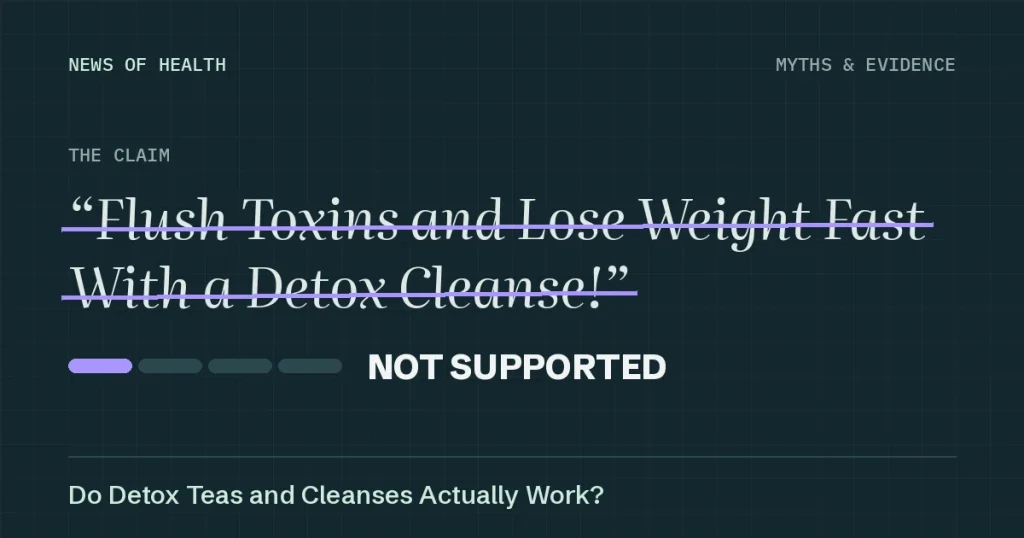
You have likely seen the ads online or on store shelves: teas, juices, and supplements that promise to “detox,” “cleanse,” and “flush” your system. They claim to remove harmful toxins, boost energy, and help you lose weight quickly. These products are part of a massive industry built on the idea that our bodies are accumulating impurities that need to be actively purged.
The appeal is understandable. The promise of a quick fix for overindulgence or a simple way to reset your health is powerful. But before you spend money on a detox regimen, it is worth asking what the scientific evidence says about whether they work, or if you even need them in the first place.
Your Body’s Built-In Detox System
The central idea behind detoxes is that modern life, from pollution to processed foods, loads our bodies with unspecified “toxins.” The truth is, your body already has a highly sophisticated and constantly running detoxification system. It is a collaborative effort, with two main organs doing the heavy lifting: your liver and your kidneys. Many of these concerns center on what are ultra-processed foods and their impact on health.
Your liver is the primary filtration system. It is a powerhouse of an organ, processing everything you eat, drink, breathe, and absorb through your skin. It contains complex enzymes that convert toxic substances into less harmful ones, which can then be safely eliminated from the body. It neutralizes metabolic byproducts, processes medications, and filters alcohol. The liver does not store toxins; it transforms them so they can be removed.
Your kidneys are the final disposal system. They filter your blood around the clock, removing waste products and excess water to create urine. This process is crucial for maintaining a stable balance of body chemicals. Together with the liver, your kidneys form an elegant and efficient system that protects you from harmful substances day in and day out. Your lungs, skin, and digestive system also play supporting roles in eliminating waste.
What Are ‘Toxins’ Anyway?
A major issue with the claims made for detox products is the vagueness of the word “toxin.” Marketers rarely name the specific toxins their products supposedly remove. In a medical context, a toxin is a poisonous substance, often one produced by a living organism. When doctors talk about detoxification, they are usually referring to medical treatments for dangerous levels of specific poisons, heavy metals, or drugs.
The toxins mentioned in detox marketing are usually undefined. Are they pollutants, pesticides, or food additives? The products do not specify, nor do they provide any proof that they eliminate them. This lack of specificity makes it impossible to test the claims scientifically. If a product does not state what it removes, how can we measure whether it has been removed?
This ambiguity is a red flag. Legitimate health interventions are based on clear, measurable outcomes. The detox industry, in contrast, often relies on vague promises of feeling renewed or purified, which are subjective and cannot be verified. Without a clear definition of the problem (the specific toxins) or a measurable outcome (their removal), the entire premise remains unsubstantiated.
The Evidence for Detox Teas and Cleanses
When we look for high-quality scientific evidence to support the use of commercial detox products, there is very little to be found. Most of the claims are based on anecdotal reports, celebrity endorsements, and ancient traditions, not rigorous human trials. Some studies that exist are often poorly designed, lack a control group, or are funded by the product manufacturers themselves, creating a clear conflict of interest.
Systematic reviews, which analyze the results of multiple studies to get a broad view of the evidence, have consistently found no convincing proof that detox diets or supplements remove any toxins from the body. The weight loss that people often experience on a cleanse is almost entirely due to fluid loss from diuretic ingredients and severe calorie restriction. This is not fat loss, and the weight is typically regained as soon as normal eating habits resume. Similar questions about efficacy arise for other popular supplements, including whether keto diet pills work for weight loss.
Many detox teas contain ingredients with a laxative or diuretic effect, such as senna leaf. While these can make you feel lighter by causing you to lose water and stool, this is not detoxification. It is simply dehydration and induced bowel movements. These effects can be harmful, potentially leading to electrolyte imbalances, dehydration, and disruption of your natural gut function if used long-term.
Potential Risks and Side Effects
Far from being a harmless health boost, detox products can come with significant risks. Because many are sold as dietary supplements, they do not face the same strict safety and efficacy testing that medications do from regulatory bodies like the FDA. This means the ingredients listed on the label might not match what is in the bottle, and products can be contaminated with harmful substances.
Common side effects of detox teas and restrictive cleanses include:
- Dehydration: Diuretic and laxative ingredients cause you to lose more fluid than usual, which can lead to dehydration.
- Electrolyte Imbalance: Losing too much fluid can disrupt the balance of crucial minerals like sodium and potassium, which are vital for heart and nerve function.
- Nutrient Deficiencies: Juice cleanses and other very low-calorie diets lack essential nutrients like protein, fiber, and healthy fats, which can leave you feeling weak and fatigued.
- Gastrointestinal Distress: Cramping, bloating, gas, and diarrhea are common, especially with products containing laxatives.
- Disordered Eating: The cycle of restricting and then returning to normal eating can foster an unhealthy relationship with food for some individuals.
For people with pre-existing health conditions, such as kidney disease or diabetes, these risks are even greater. The ingredients in some detox products can also interact with prescription medications, making them less effective or increasing the risk of side effects. It is always wise to be skeptical of any product that promises dramatic results with little effort.
When to see a doctor
While commercial detoxes are unnecessary, true medical detoxification is sometimes required. You should seek medical attention if you suspect you have been exposed to a specific, dangerous poison, such as heavy metals like lead or mercury, or if you are experiencing withdrawal from alcohol or drugs. These situations require professional medical supervision.
You should also consult a doctor if you experience persistent symptoms that you might mistake as a sign of “toxin buildup.” These can include unexplained fatigue, persistent headaches, chronic digestive issues, skin problems like rashes or acne, or unexplained weight changes. These symptoms are not caused by a vague accumulation of toxins but could be signs of an underlying medical condition that needs proper diagnosis and treatment. A doctor can help you identify the real cause and recommend evidence-based solutions, rather than a cleanse that offers false promises and potential risks.