What Does Chronic Stress Do to the Body?
Verdict: Overstated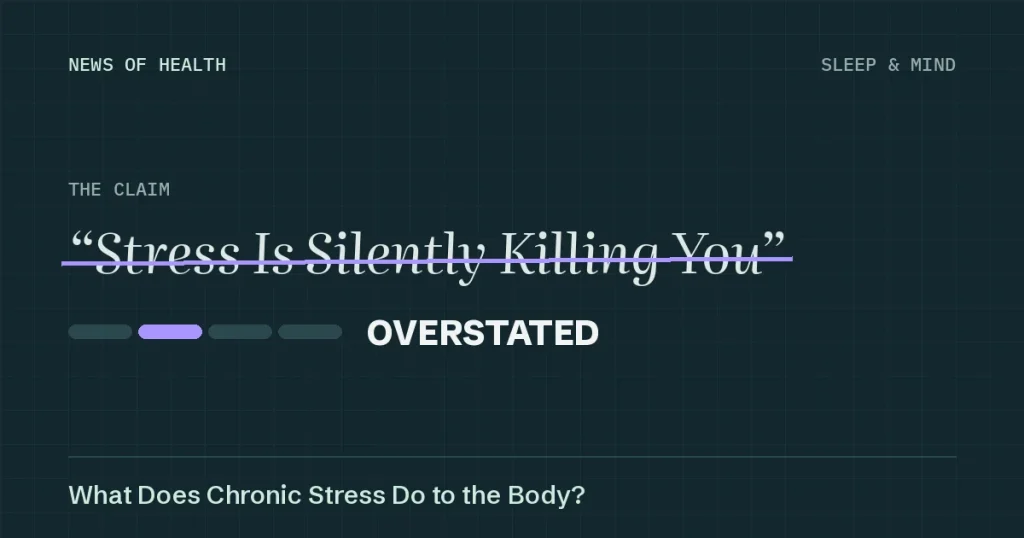
How Stress Affects Your Heart and Blood Pressure
One of the most well-documented effects of chronic stress is on the cardiovascular system. When you feel stressed, your body releases hormones like adrenaline and cortisol. These hormones are part of the “fight-or-flight” response, preparing you to face a threat. They cause your heart to beat faster and your blood vessels to narrow, which temporarily increases your blood pressure.
In the short term, this is a normal and even helpful response. But when stress becomes chronic, your body is in this high-alert state for extended periods. Over time, persistently high levels of stress hormones can lead to inflammation and damage to your arteries. This can contribute to the buildup of plaque, a condition known as atherosclerosis, which makes arteries less flexible and can increase the risk of heart attacks and strokes.
Large observational studies consistently show a link between high levels of perceived stress and an increased risk of developing hypertension (high blood pressure) and experiencing major cardiovascular events. While stress is not the only factor, genetics, diet, and exercise play huge roles, it is recognized as a significant contributor. Managing stress is therefore a key part of a heart-healthy lifestyle, alongside other established habits like maintaining a healthy weight and not smoking. Learning to identify what are ultra-processed foods can be a helpful step in improving your diet.
Stress and Your Immune System
You may have noticed you get sick more often when you are going through a stressful period. There is good evidence to support this connection. The same stress hormone, cortisol, that affects your heart also plays a complex role in regulating your immune system. In short bursts, cortisol can actually reduce inflammation. But when you are under constant stress, your body can become less sensitive to cortisol’s effects.
This can lead to a state of chronic inflammation, which is linked to a wide range of health problems. At the same time, prolonged stress can suppress other parts of your immune system, making you more vulnerable to infections. This is why you might be more likely to catch a common cold or have a flare-up of a latent virus, like cold sores, when you’re under pressure.
The evidence here is quite strong, coming from both laboratory studies and real-world observations. Research shows that people reporting high levels of chronic stress may have slower wound healing and a reduced antibody response to vaccines compared to those with lower stress levels. This doesn’t mean stress will automatically make you sick, but it can weaken your body’s defenses, making it harder to fight off germs.
Does Stress Cause Stomach Ulcers and Digestive Issues?
It was once common to believe that stress directly caused stomach ulcers. We now know that the vast majority of peptic ulcers are caused by infection with H. pylori bacteria or the long-term use of nonsteroidal anti-inflammatory drugs (NSAIDs). Stress is no longer considered a primary cause. However, that does not mean stress has no effect on your digestive system.
Stress can worsen the symptoms of many digestive conditions. The gut is sometimes called the “second brain” because it has its own complex nervous system that is in constant communication with the brain. When you’re stressed, this communication can be disrupted. This can affect how quickly food moves through your system, leading to diarrhea or constipation. It can also increase gut sensitivity, making you feel pain, cramping, or nausea more intensely.
For people with chronic conditions like irritable bowel syndrome (IBS) or inflammatory bowel disease (IBD), stress is a well-known trigger for flare-ups. While managing stress won’t cure these conditions, it is an important part of managing symptoms and improving quality of life. The connection is not just in your head; stress has a real, measurable impact on gut function, inflammation, and the balance of gut bacteria.
The Link Between Stress, Memory, and Mood
Chronic stress has a significant impact on your brain, affecting everything from your mood to your ability to think clearly. The brain regions most involved in memory and emotional regulation, like the hippocampus and prefrontal cortex, are particularly sensitive to the effects of cortisol. Prolonged exposure to high levels of this hormone can impair the function of these areas.
You might experience this as “brain fog,” difficulty concentrating, or problems with short-term memory. It can feel harder to make decisions or to learn new information. These effects are generally reversible if the stress is reduced. However, very long-term, severe stress may contribute to more lasting changes in brain structure and function, though more research is needed to understand this fully.
The connection between chronic stress and mood disorders like anxiety and depression is very strong. While stress doesn’t automatically lead to these conditions, it is a major risk factor. It can disrupt the balance of neurotransmitters like serotonin and dopamine, which are crucial for regulating mood. For individuals who are already predisposed to these conditions, a period of intense or chronic stress can be a powerful trigger.
How Strong Is the Evidence?
When we talk about stress and health, it is vital to understand the evidence. Most of the research linking chronic stress to disease comes from observational studies. These studies follow large groups of people over many years, measuring their stress levels and tracking their health outcomes. They consistently find strong associations, or correlations, between high stress and conditions like heart disease, but they cannot prove that stress is the direct cause.
People who are highly stressed may also be more likely to have other unhealthy habits, such as: Understanding how much sleep do adults need is an important part of managing overall health.
- Smoking or drinking alcohol excessively
- Eating a less healthy diet
- Sleeping poorly
- Exercising less
These are all independent risk factors for many diseases, and it can be difficult to separate their effects from the direct biological impact of stress itself. This is called confounding, and it is a major challenge in this type of research.
Randomized controlled trials, the gold standard in medical research, are difficult to conduct for chronic stress. It would be unethical to assign people to a “high-stress group” for years. Instead, researchers conduct trials on stress-reduction interventions, like mindfulness or cognitive-behavioral therapy. These trials often show that lowering stress can improve health markers like blood pressure or immune function, which provides stronger evidence for a causal link. Overall, the evidence is solid that chronic stress is a contributor to ill health, even if it is not the sole cause of most diseases.
When to See a Doctor
While some level of stress is a normal part of life, you should consider speaking with a healthcare professional if stress is persistently affecting your daily life or physical health. It is time to seek help if you experience any of the following:
You feel overwhelmed most of the time, and your feelings of stress or anxiety are constant and intense. If you are unable to manage your daily responsibilities at work, school, or home because of how you are feeling, it is a clear sign that you may need support.
If stress is leading to unhealthy coping mechanisms, such as a significant increase in alcohol consumption, smoking, or using other substances, it is important to get professional guidance. Similarly, if you are experiencing significant changes in your eating or sleeping patterns, such as chronic insomnia or a complete loss of appetite, a doctor can help.
Finally, if you are having thoughts of harming yourself or others, you must seek help immediately. These are signs of a mental health crisis. You should also see a doctor if you develop new physical symptoms like frequent headaches, chest pain, recurring digestive problems, or dizziness, to rule out other medical causes and discuss the role that stress may be playing.