Blue Light and Sleep: Do Screens Really Matter?
Verdict: Overstated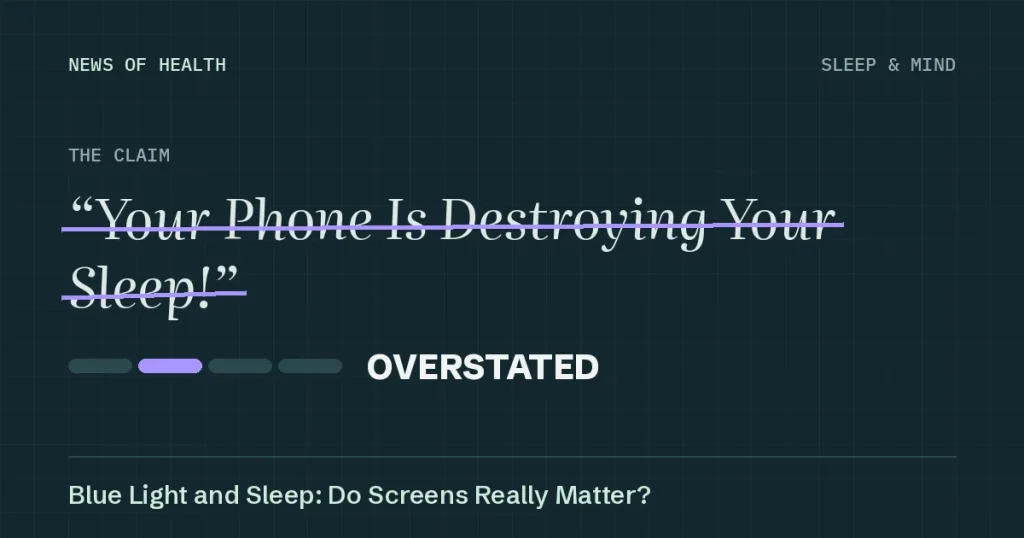
How light influences your body clock
To understand the debate about blue light, it helps to first understand how light in general affects your body. Humans, like most living things, have internal clocks that regulate when we feel sleepy and when we feel alert. This is known as our circadian rhythm.
This internal clock, located in a part of the brain called the suprachiasmatic nucleus, runs on a roughly 24-hour cycle. Its most powerful cue for staying on schedule is light. When light enters your eyes, specialized cells in the retina send signals to this master clock, telling your brain it is daytime. In response, your brain suppresses the production of melatonin, a hormone that promotes sleep.
As natural light fades in the evening, your body starts producing more melatonin, which signals that it is time to wind down and prepare for sleep. This natural, light-driven cycle is why you generally feel more awake during the day and sleepier at night. Any light exposure in the evening can, in theory, interfere with this process by tricking your brain into thinking it is still daytime, thereby delaying melatonin release and making it harder to fall asleep.
What’s special about blue light?
Light is not all the same. The visible light spectrum is made up of different colors, each with a different wavelength. Blue light has a shorter wavelength and higher energy compared to colors like orange and red. The sun is our biggest source of blue light, and it is this component of daylight that is most effective at signaling to our brain to be alert and awake.
The cells in our eyes that communicate with our internal clock are particularly sensitive to these shorter wavelengths. This makes perfect sense from an evolutionary perspective: the bright, blue-rich light of midday is the strongest signal that we should be active. The warmer, redder tones of sunset are a weaker signal, allowing melatonin production to begin.
The concern in recent years has focused on artificial sources of blue light. Electronic screens, like those on smartphones, tablets, computers, and televisions, use light-emitting diodes (LEDs) that produce a significant amount of blue light. The worry is that using these devices in the hours before bed exposes our brains to a strong “daytime” signal precisely when they should be getting a “nighttime” one, thus disrupting our sleep.
What does the evidence say?
The idea that evening blue light can disrupt sleep is biologically plausible and has been demonstrated in laboratory settings. Studies conducted in controlled environments have shown that exposing people to bright blue light in the evening can delay the release of melatonin and shift their circadian rhythms. Participants in these studies might take longer to fall asleep or report feeling less sleepy after being exposed to blue light compared to dimmer, warmer light or darkness.
However, what happens in a lab is not always what happens in real life. The intensity of light is a crucial factor. The light from a typical smartphone or tablet held at a normal distance is far less intense than the blue light used in many lab experiments. In fact, the light intensity from indoor room lighting can often be a more significant source of evening light exposure than a personal device screen.
Systematic reviews that gather and analyze the results of many small studies have found mixed results. While some trials suggest that limiting screen use or using blue light filtering glasses can have a small positive effect on sleep, the quality of the evidence is often low. Many studies are small, short-term, and rely on participants self-reporting their sleep quality, which can be subjective. It is difficult to separate the effects of the blue light itself from the effects of what people are doing on their screens, such as engaging in stimulating social media, stressful work emails, or exciting video games.
Ultimately, while there is a clear mechanism by which blue light can affect sleep, the evidence that it is a major problem for most people in the real world is not as strong as the headlines suggest. The impact of screen light is often exaggerated compared to other, more powerful factors.
Factors more important than blue light
Focusing solely on blue light can distract from other elements of your evening routine that have a much larger, well-established impact on sleep quality. If you are struggling with sleep, consider these factors first.
- Activity and stimulation: What you do on your screen matters immensely. Answering work emails or having a stressful conversation online is far more likely to keep you awake than passively watching a calm video. Your brain needs time to unwind. Engaging in stimulating mental activity right before bed can trigger a stress response, making it difficult to fall asleep, regardless of the light involved.
- Timing and consistency: Your body thrives on routine. Going to bed and waking up at roughly the same time every day, even on weekends, helps to stabilize your circadian rhythm. Using screens late into the night often means you are simply delaying your bedtime, which is a more direct cause of insufficient sleep than the color of the light.
- Total light exposure: The overall brightness of your environment plays a huge role. A brightly lit room can suppress melatonin even without a screen. Dimming the lights in your home an hour or two before bed sends a powerful signal to your brain that it is time to prepare for sleep. This may have a much greater effect than simply turning on your phone’s night mode.
- Caffeine and alcohol: Consuming stimulants like caffeine too late in the day can directly interfere with your ability to fall asleep. While alcohol might make you feel drowsy initially, it disrupts sleep architecture later in the night, leading to a less restful slumber. These chemical influences are often much stronger than the subtle effects of screen light.
Practical steps for better sleep hygiene
Instead of worrying excessively about blue light, a better approach is to focus on creating a relaxing, sleep-promoting evening routine, often called “sleep hygiene.” The goal is to create a buffer zone between your busy day and your time for rest.
Consider creating a “digital sunset.” This means putting away all electronic devices, phones, tablets, and laptops, for a period before you plan to go to sleep. This is not just about avoiding blue light; it is about giving your brain a break from the constant stream of information and stimulation. Use this time to do something relaxing, like reading a paper book, listening to calm music, stretching, or taking a warm bath.
If you must use a screen in the evening, you can take simple steps to minimize potential disruption. Most devices have a “night mode” or “night shift” setting that warms up the color temperature of the screen, reducing the amount of blue light it emits. You can also simply lower the brightness of the screen to the minimum comfortable level. While blue light filtering glasses are heavily marketed, the evidence for their effectiveness is limited and inconsistent. A good evening routine is a more reliable strategy.
Pay attention to your sleep environment. Your bedroom should be a sanctuary for sleep. Keep it dark, quiet, and cool. Use blackout curtains or an eye mask to block out light, and consider using earplugs or a white noise machine if you are sensitive to sound. Finally, try to get plenty of bright, natural light exposure during the day, especially in the morning. This helps anchor your circadian rhythm and makes your brain more responsive to the absence of light at night.
When to see a doctor
While poor sleep hygiene is a common cause of sleep difficulties, persistent problems can sometimes signal an underlying medical issue. It is a good idea to speak with a healthcare professional if you experience any of the following:
You consistently have trouble falling asleep or staying asleep for more than a few weeks, despite making changes to your routine. If it regularly takes you a long time to fall asleep, or if you frequently wake up during the night and cannot get back to sleep, it is worth discussing with a doctor.
You experience excessive daytime sleepiness that interferes with your work, school, or daily activities. Feeling so tired during the day that you struggle to stay awake while driving or have trouble concentrating on tasks is a sign that your sleep is not restorative and should be investigated.
You or your partner notice symptoms of a potential sleep disorder, such as loud, frequent snoring, gasping or choking sounds during sleep, or a strong urge to move your legs at night. These can be signs of conditions like sleep apnea or restless legs syndrome, which require medical diagnosis and treatment.
Your sleep problems are accompanied by significant mood changes, such as feelings of depression or anxiety. Sleep and mental health are closely linked, and a professional can help determine the best course of action for addressing both.